When Is the Best Time to Install Epoxy With Riverside Heat and Santa Ana Winds

The thermometer on the garage wall says the day is fine. The slab often says otherwise. Anyone coating a floor in Riverside, CA learns to read the concrete before the air, and the notes at epoxy floor installation riverside clytemnestra project go through timing and weather the same way, one variable at a time. Epoxy reacts to heat, moisture and wind, and each one leaves a mark in the finished surface.
Heat shortens the working time
Epoxy cure is exothermic. The mixed material makes its own heat, and a warm slab and warm air add to it. Pot life drops sharply as temperature climbs, so a batch that stays workable for a while in a cool morning can stiffen in the bucket on a hot Inland Empire afternoon. Hotter does not mean a better cure. It means less time to roll the base coat out before it starts to grab.
Mixing smaller and picking the hour
On hot days in Riverside, installers mix smaller batches and pour them out of the bucket quickly, since material left in the pail keeps building heat. Many schedule the coating for early morning or evening. Polyaspartic topcoats move even faster than epoxy, so the same discipline applies to them, with short mixes and a clear plan for each pass.
Outgassing and the slab temperature curve
Concrete is full of pores holding air. When the slab warms, that air expands and rises through the wet coat, leaving bubbles and pinholes. Grinding opens those pores further, which is why the timing of the primer matters. Coating while the slab is steady or cooling pushes the air in the other direction, and outgassing drops. Late afternoon, as the shade moves across the driveway, is usually a better window than late morning.
Santa Ana winds and open doors
Santa Ana winds carry dust, leaves and grit from the hills toward Mount Rubidoux and across the valley. Wet coating catches all of it, and a single leaf pressed into a clear coat is permanent once it cures. Garage doors are usually kept closed during application. Wind is not a free drying aid either. It skins the surface, drags debris in and can pull flake or broadcast media off line.
Measure the slab and watch the dew point
Most coatings list a minimum and maximum application temperature, and that range applies to the slab, taken with a surface thermometer. Air temperature alone cannot say whether conditions are right. The slab should also sit above the dew point, commonly by at least five degrees Fahrenheit, or moisture condenses under the coat and clouds or weakens the bond. Evening jobs near the Santa Ana River can drift toward that line as the air cools.
Sun patches and uneven cure
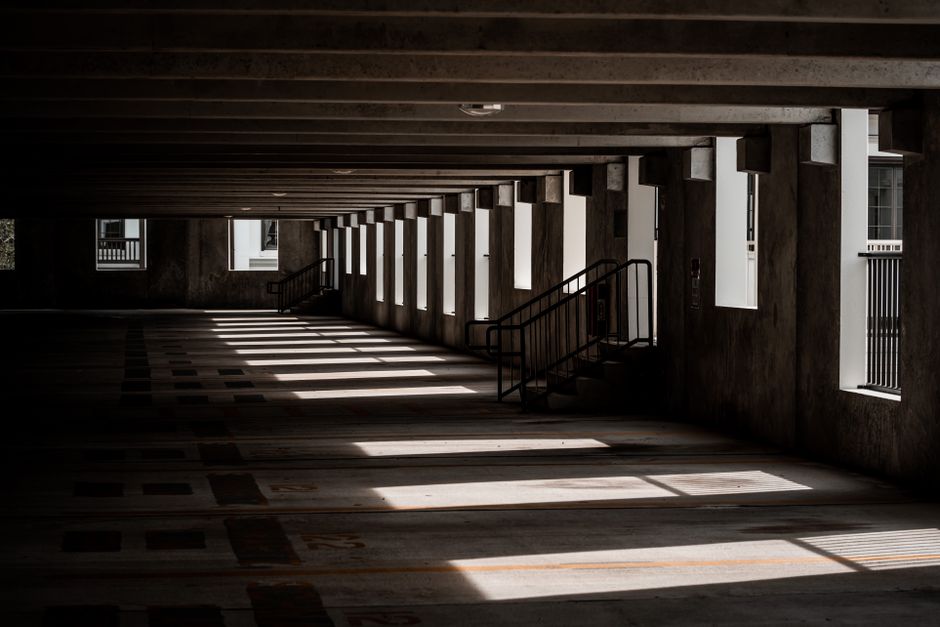
A beam of direct sun through a door or window warms only part of the floor. That strip cures faster than the shaded section beside it, and the difference can show up as uneven gloss or bubbling along the line. Installers cover glass, block the light or move the work to another time, then check slab temperature in several spots before mixing.